Security awareness training

Security awareness training that does not stop at the simulation

PhishGun gives you both kinds of employee training: a library of ready-made training modules you assign to employees and track to the score, and short, localized micro-training delivered the second someone submits a password to a simulated phishing page. Add your own modules built on your internal guidelines, and every result becomes evidence of a working awareness program.

  • Ready-made modules plus your own
  • Slovak, Czech and English
  • Completion and scores per employee

How it works

Two kinds of training, one record

A yearly e-learning course produces records, not behaviour change. PhishGun keeps the structure a program needs and adds the lesson at the moment it matters.

Modules you assign

Ready-made modules from the library, or your own built on your internal guidelines.

  • A few short pages plus quiz questions, under ten minutes
  • Assign to individual employees or whole teams
  • See who finished and what score they got
  • Slovak, Czech and English

The lesson after they submit

When an employee submits data to the simulated page, it turns into a short lesson about that exact message.

  • Nothing typed is stored, and the employee is told so
  • The give-away signals, one at a time, on top of the email they opened
  • Positive feedback for employees who report instead
  • Clicks, submissions, reports and scores in one record per person and team

Training capabilities

What the training solution covers

PhishGun covers both kinds of employee training: structured modules you assign and score, and the lesson that appears the moment someone submits data to a simulated page. Both feed the same record of who was trained, when and with what result.

Training module library

Ready-made modules on phishing, social engineering, credential safety, data protection and incident reporting, each a few pages plus quiz questions, filterable by category and language.

Assignments with completion and scores

Assign modules to individual employees or whole teams, then see who finished, who has not started and what score each person achieved.

Custom modules from your own guidelines

Build your own training modules around your internal security guidelines, processes and tools, so employees are trained on how your organisation actually works, not a generic course.

In-the-moment micro-training

Submitting data to the simulated page opens a short lesson about the exact message the employee just fell for: the sender, the urgency, the link or the login page they should have questioned.

Positive reinforcement for reporters

Employees who report a simulation instead of clicking are told they got it right, which turns reporting into a habit rather than a chore.

Audit-ready training evidence

Export who was trained, when and with what result, together with campaign behaviour, as evidence for NIS2, ISO 27001 clause 7.3 and DORA awareness reviews.

Training library

A library of training modules you can assign, track and extend

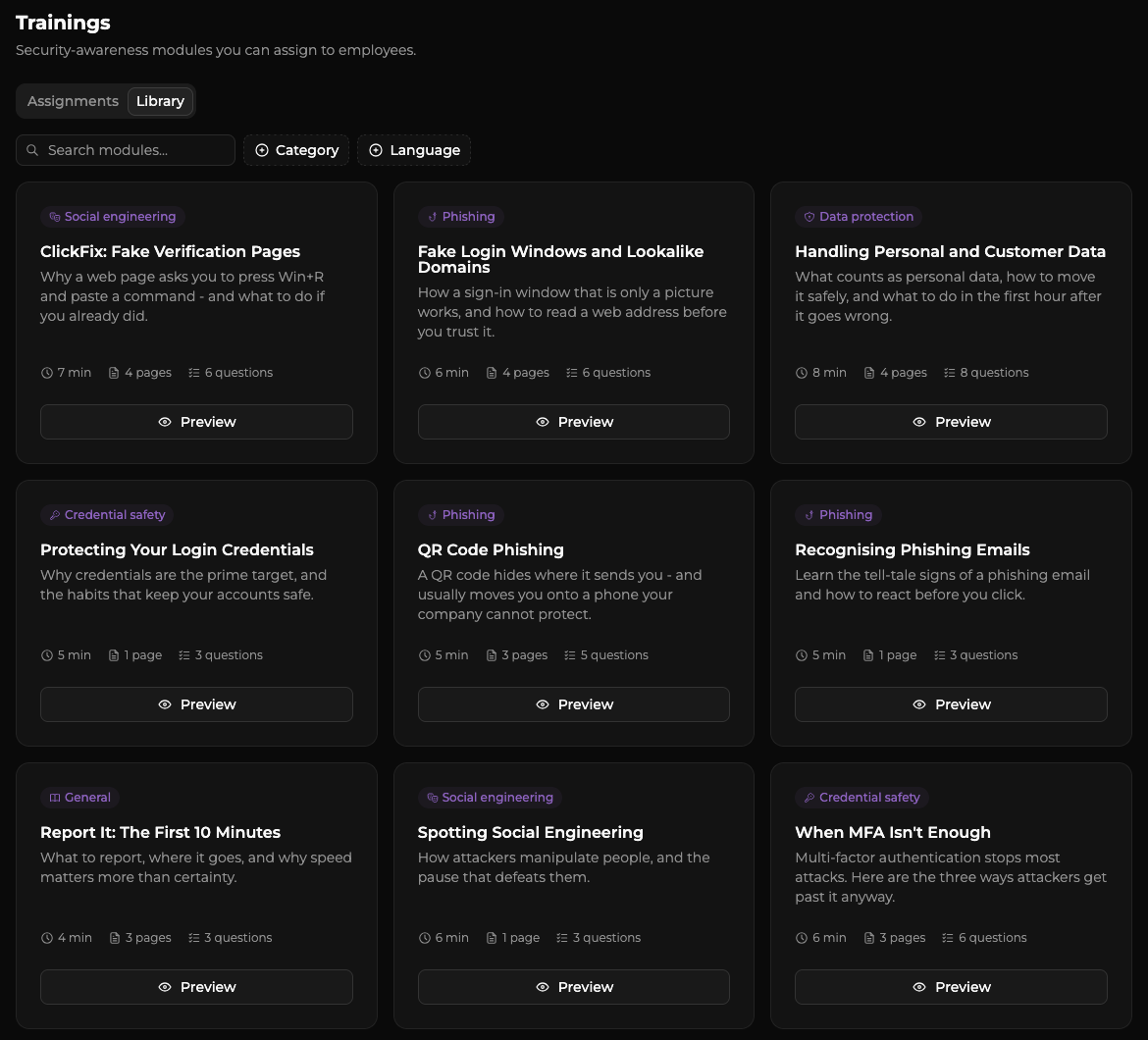
The Trainings library is the structured part of the program. Pick a module, assign it to the people or teams who need it, and follow completion and scores from the Assignments view instead of chasing spreadsheets.

  • Ready-made modules on phishing emails, QR code and ClickFix lures, fake login windows, social engineering, credential safety, personal data and incident reporting.
  • Each module is a few short pages plus quiz questions, so a score shows what the employee actually took in.
  • Build custom modules around your internal guidelines and assign them like any other module, with the same completion and score tracking.
PhishGun training module library

The teachable moment

Training that arrives while the email is still open

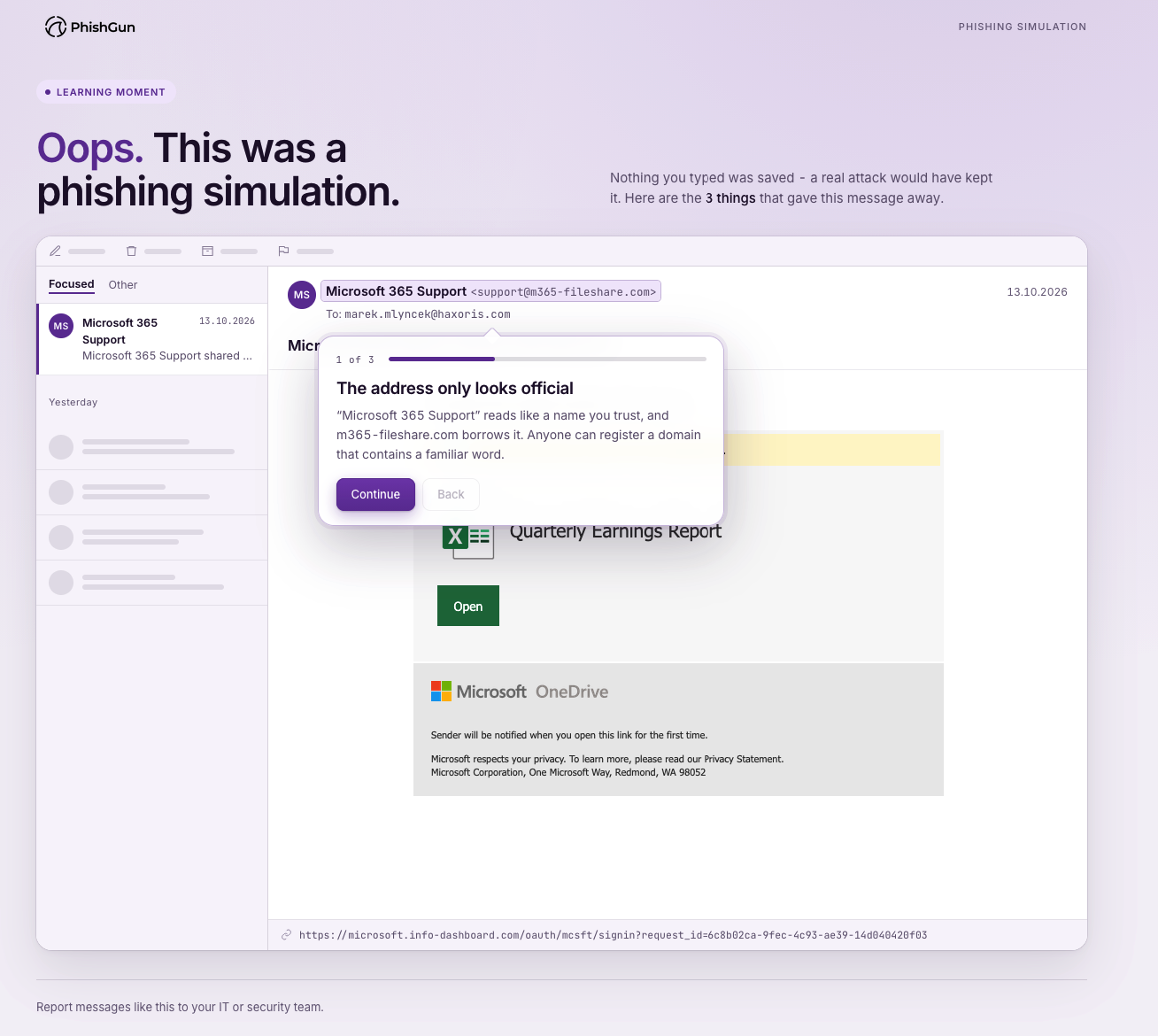
The page an employee sees after submitting a password to the simulated login is not a dead end or a reprimand. It confirms that nothing they typed was stored, then walks through the signals that gave the message away, one at a time, on top of the very email they opened - in their language, with what to do when the real thing arrives.

  • Lessons tied to the specific lure: invoice, payroll, supplier, QR, credential or collaboration-platform scenarios.
  • Short enough to finish in a few minutes, with no separate course to enrol in and nothing to install.
  • Written for Slovak, Czech and English-speaking teams, not machine-translated.
PhishGun learning moment after submitting data to a simulated phishing page

Follow-up

Know who needs more training, and who already gets it

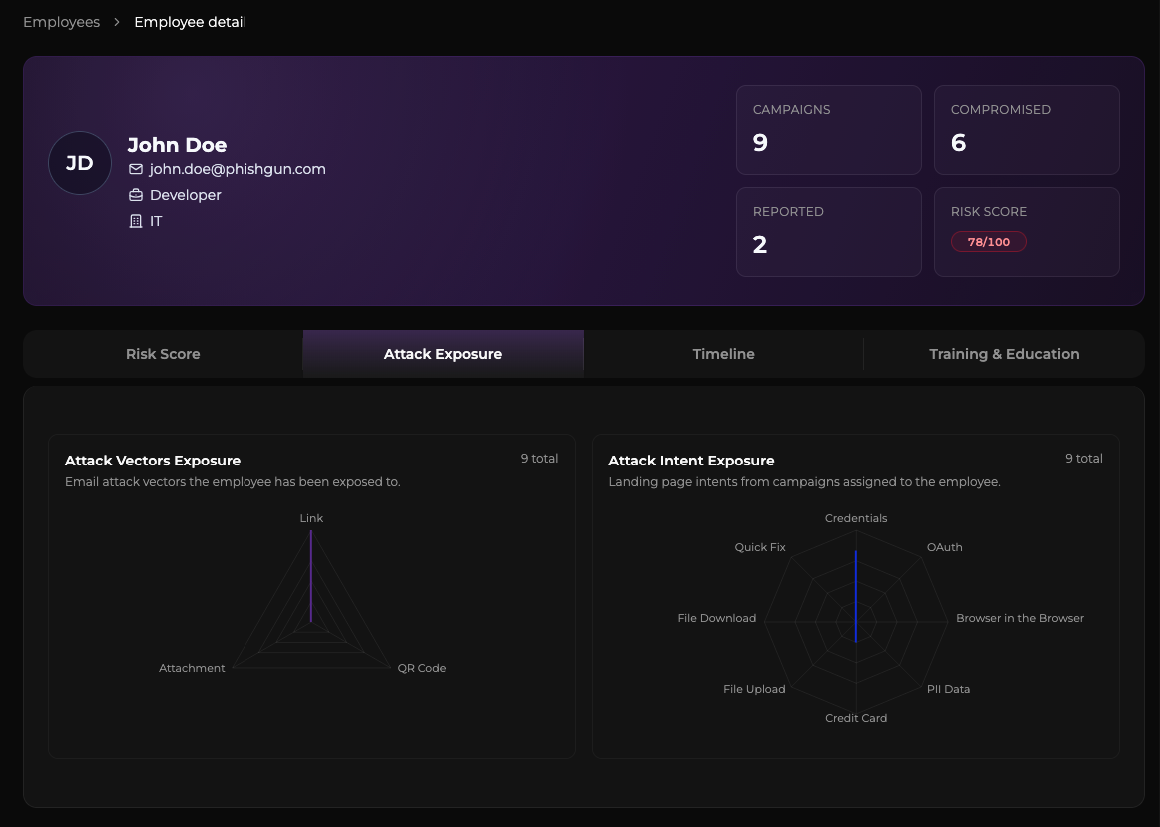
Completion numbers hide the people who still click. PhishGun shows training completion, improvement between campaigns and repeat risk side by side, by team and department.

  • Module completion, scores and repeat clickers per team and department.
  • Trend of click rate and report rate across campaigns to prove the training works.
  • Target follow-up campaigns and training at the groups with the highest risk.
PhishGun employee risk and engagement breakdown

Evidence

Awareness training records your auditor will accept

Regulators and certification auditors ask for proof that employees are trained regularly and that the training is effective. PhishGun exports both: participation and training completion, plus the measured behaviour change behind it.

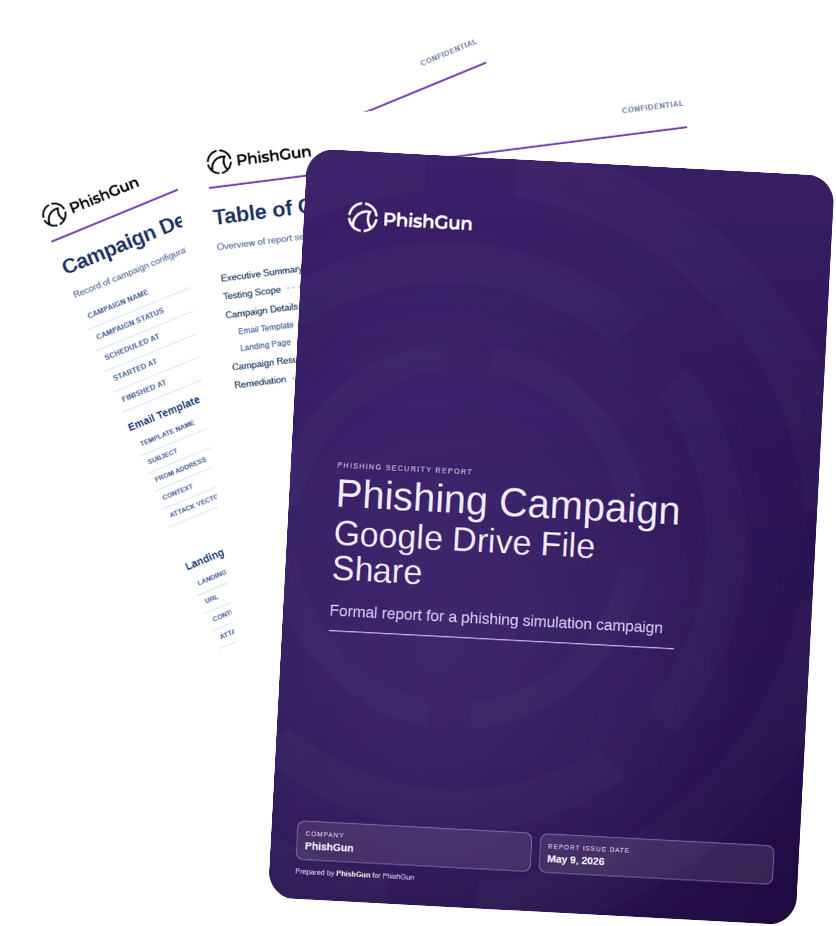
  • Branded PDF reports with training completion and risk trends per campaign.
  • Evidence mapped to NIS2 cyber hygiene and training duties, ISO 27001 clause 7.3 and control A.6.3, and DORA awareness programmes.
  • Per-team breakdowns for management reviews and internal audits.
PhishGun PDF report export

Training flow

What an employee experiences

Training reaches employees two ways: modules assigned by you and lessons triggered by their own behaviour. Both end up in one record.

01

A module is assigned

An employee or team receives a training module from the library or one of your own, works through its pages and answers the quiz questions.

02

A simulated email arrives

A localized lure lands in the inbox during a normal workday, with no warning and no classroom.

03

Submitting opens the lesson

The click lands on a safe page. If the employee submits, nothing is stored and the page turns into a short explanation of the message and the signals it contained.

04

Reporters get recognised

An employee who reports the message through the report button is told they did the right thing.

05

Progress and evidence are recorded

Module completion and scores, improvement and repeat risk are recorded per person and team, and the training record goes into the report for leadership, auditors and regulators.

Compliance

Training duties the record covers

Awareness training is a named obligation in the main European frameworks. PhishGun gives you the participation and effectiveness evidence each of them expects.

NIS2

Essential and important entities must apply basic cyber hygiene practices and cybersecurity training, and management must follow training and offer it to employees regularly. Simulation and training records show the duty is met and the training works.

ISO 27001

Clause 7.3 requires employees to be aware of the security policy and their role in it; control A.6.3 requires awareness, education and training. Completion and behaviour records are the evidence certification auditors ask for.

DORA

Financial entities must run ICT security awareness programmes and digital operational resilience training as compulsory modules for staff. Repeated simulations with training provide the ongoing record.

Trust principles

Awareness programs should improve culture, not shame people

PhishGun is built by offensive-security practitioners who understand both realistic attacker behaviour and the trust needed to run awareness programs well.

Privacy by design

Collect the data needed to measure security behaviour while keeping program reporting focused and proportionate.

Positive reinforcement

Reward reporting and teach missed indicators without public shaming or punitive workflows.

Operational safety

Run simulations with controlled landing pages, clear admin visibility, and realistic but safe content.

Compliance support

Produce practical evidence of recurring awareness activity for governance and audit discussions.

Security awareness training questions

Short answers for teams comparing training approaches.

PhishGun covers security awareness training end to end: a library of ready-made training modules with quiz questions, assignments with completion and score tracking, custom modules built on your own internal guidelines, and micro-training the moment an employee submits data to a simulated phishing page. Custom modules also let you cover your own internal policies and procedures on the same platform.
Minutes, not hours. A library module is a few short pages plus quiz questions and typically takes under ten minutes. The lesson after submitting data to a simulated page takes a few minutes and covers only the signals in that message. There is no separate course to enrol in and nothing to install.
Yes. Build custom modules around your internal security guidelines, processes and tools, then assign them to people or teams like any library module. Completion and scores are tracked the same way, so your own guidelines become part of the training record.
No. The lesson explains rather than reprimands, there are no punitive workflows or public shaming, and employees who report get positive feedback. PhishGun is built on positive reinforcement because that is what changes behaviour.
Yes. Export training completion, participation and behaviour trends per campaign as PDF reports. They document both that training happened and that it changed behaviour, which is what auditors and regulators ask for.

Next step

See the training library and the lesson an employee gets after falling for a lure

Book a 30-minute demo and walk through the module library, an assignment with its scores, the simulated email, the lesson that follows a submitted password and the training evidence in the report.